When it is time to order corrugated boxes, several factors must be considered. Choosing the right corrugated box affects product protection, shipping costs, customer experience, and overall packaging spend. In this post, we look at the impact of box size, board strength, shipping method, branding, and packaging support on cost and product protection.
Choose the Right Box Size
When buying off-the-shelf corrugated boxes, one of the first things often compromised is fit. When a product is in an oversized box, it bounces around in transit, risking damage, or you must use excess filler, like packaging peanuts, bubble wrap, or paper.
There are several problems with this approach. One is increased costs. In addition to higher material costs from the larger box and dunnage, transportation costs increase. Larger boxes mean you get fewer boxes per pallet and truck loads, which results in more loads, more fuel, and higher shipping costs. If you are in eCommerce and shipping via freight carriers such as FedEx, UPS, or USPS, you are charged dimensional (DIM) weight, which is based on package density. You pay the greater of the package weight or the calculated dimensional weight based on the box’s size. You are essentially paying to ship empty space.
The second issue is the environmental impact. Styrofoam packaging peanuts and bubble wrap will end up in the waste stream, as neither is recyclable. While packaging paper and the oversized box can be recycled, they still must be manufactured and shipped, which uses resources.
The solution is to order corrugated boxes optimized for your product and lightweighted through innovative packaging designs. This eliminates overpackaging and reduces the materials and energy required to manufacture, transport, and handle corrugated packaging.
Select the Proper Board Strength
Corrugated boxes are made from sheets of corrugated board. The corrugated board is made by gluing liner board to fluted medium. Single-wall is one corrugated medium sandwiched between two linerboards. When another fluted medium and liner is added, it is called a double-wall. Building on that is triple-wall, four sheets of linerboard are interweaved with three sheets of corrugated medium.
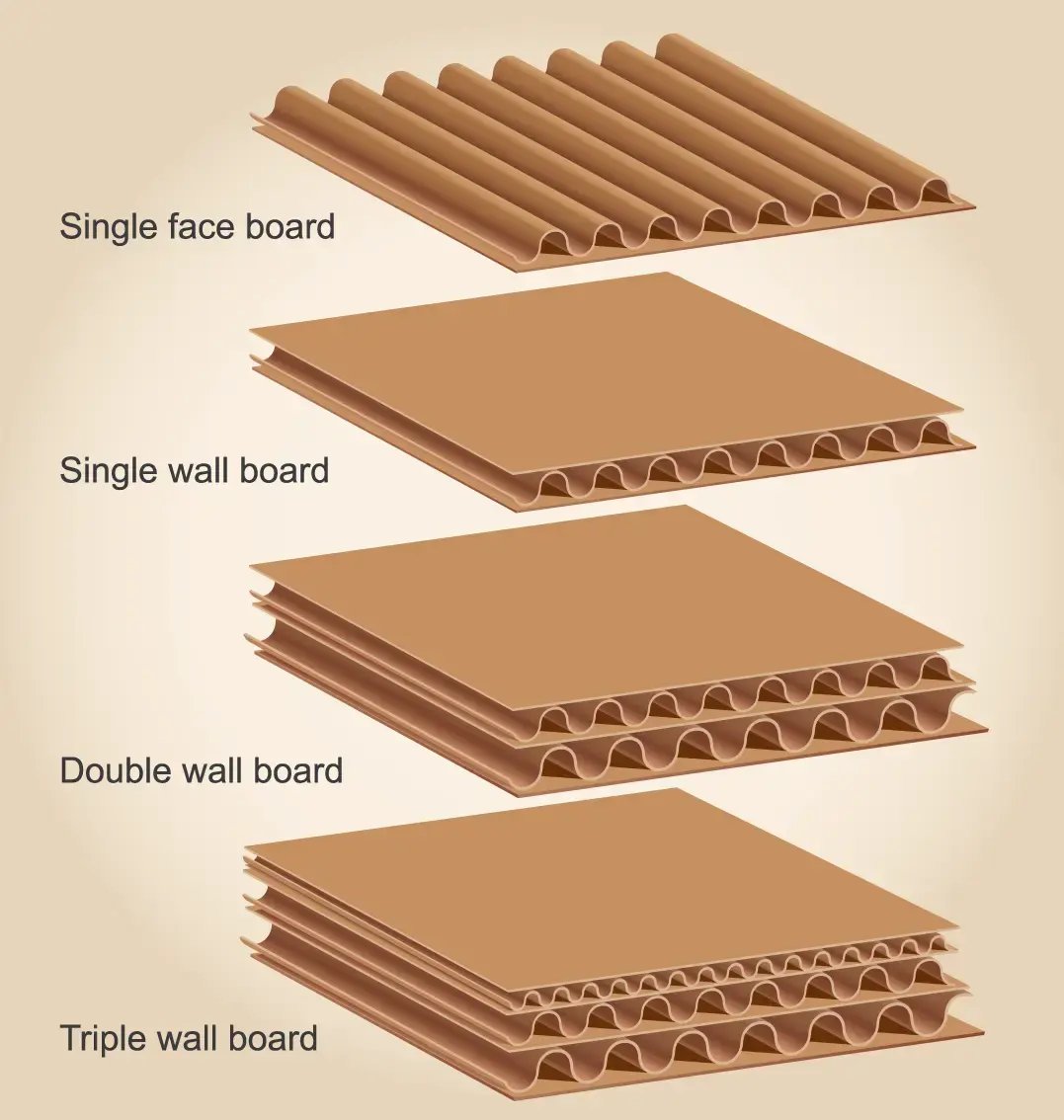
Board strength refers to how well corrugated material withstands pressure, stacking, handling, and shipping conditions. Its strength is affected by board grade, flute profile, liner and medium materials, wall construction, and the box design. A stronger board is not always the better choice. The right board is the one that protects the product without adding unnecessary material, weight, or cost.
Board strength should match the product, the shipping method, and the way the box will be handled. A lightweight product shipped on a pallet may not need the same board as a heavy product moving through parcel carriers, LTL freight, or repeated warehouse handling. The goal is to optimize the box to the product’s needs.
Single-wall and double- or triple-wall corrugated serve different purposes. Single-wall boxes are often a practical choice for lighter products and standard shipping conditions. Double- and triple-wall boxes add rigidity and stacking strength for heavier products, bulk shipments, or applications where the box needs to withstand more handling.
Edge Crush Trest (ECT) is a standard test for determining the board's strength. ECT ratings help define how much stacking and compression strength a box can provide. In some cases, a customer may be using a board grade that is stronger — and more expensive — than the application requires.
Weight capacity should be considered as part of the full packaging system. The right box depends on what is being packed, how it is packed, whether it is palletized, how far it is shipping, and what conditions it will face in transit.
Consider How the Box Will Be Packed and Shipped
Before you order corrugated boxes, consider what happens to the box from the time it is packed until the product reaches its destination. A box packed by hand may have different design requirements than one moving through automated case erecting, packing, and sealing equipment. The type of tape, adhesive, staples, or other closure method can also affect box design.
Shipping conditions should also be considered. Boxes moving as individual parcels may be dropped, turned, and handled repeatedly. Palletized shipments must withstand stacking and compression during storage and transit. Products shipped through LTL freight may be handled and transferred several times before reaching the customer.
Warehouse conditions are also important. Long-term stacking, humidity, cold storage, and other environmental conditions can affect corrugated performance. Providing this information to your packaging supplier helps ensure the box is designed for the full distribution process, not just the product's weight.
Table: Factors Impacting Box Structural Design and Performance
Several factors affect how a corrugated box should be designed. Before placing an order, review how the product will be packed, stored, handled, and shipped.
|
Consideration |
Packaging Impact |
|
Product weight |
Affects board strength and box design |
|
Parcel or pallet shipping |
Changes handling and compression requirements |
|
Manual or automated packing |
Can affect box style and dimensions |
|
Stacking height |
Adds compression load to lower boxes |
|
Warehouse conditions |
Humidity and storage conditions can affect performance |
|
Closure method |
Tape, adhesive, or staples may affect the box design |
Think About Branding
A corrugated box can do more than protect a product. Printed packaging can help identify shipments, reinforce brand recognition, provide handling information, and create a more consistent customer experience. Before you order corrugated boxes, consider what information needs to appear on the outside of the package and how important the box is to the customer experience.
A one-color printed logo may be sufficient for industrial, wholesale, or business-to-business shipments. Retail and eCommerce packaging may benefit from more detailed graphics or full-color printing, particularly when the shipping box is part of the product presentation. Branding should be considered during the box design process. Printing, labels, inserts, and the way the package opens can be incorporated into the overall design rather than added after the box has already been specified.
Choose the Right Packaging Partner When You Order Corrugated Boxes
Where you order corrugated boxes can affect box performance, lead times, and overall packaging costs. A packaging supplier should look beyond basic dimensions and board grade to understand the product, shipping method, handling conditions, order volume, and current packaging process.
Atlas Container designs and manufactures custom corrugated packaging based on the needs of the product and supply chain. Our team can review existing boxes, identify opportunities to right-size or lightweight packaging, and develop prototypes for testing before production.
Customers also have direct access to design and production support. Fast turnaround, reliable delivery, and packaging assistance help manufacturers order corrugated boxes that meet performance requirements without adding unnecessary material or cost.
Before you order corrugated boxes, make sure the boxes are designed for the product and its movement through shipping and handling. Contact Atlas Container to discuss your packaging needs or have our team review your current corrugated boxes.